
+86-15712686880 / +86-576-82424800


Views: 0 Author: Site Editor Publish Time: 2025-12-10 Origin: Site


When it comes to choosing an HVAC system for your property, one of the most important decisions you’ll make is selecting between ducted and non-ducted fan coil units (FCUs). Both systems offer unique advantages depending on the size, layout, and specific needs of your space. In this guide, we’ll explore the key differences between ducted and non-ducted fan coil units, the benefits of each, and how to choose the right system for your property.
A ducted fan coil unit is integrated with an existing ductwork system, typically installed in a ceiling or under the floor. These units use air ducts to distribute the conditioned air throughout the space, allowing multiple rooms to benefit from the system. The fan coil unit itself handles the temperature regulation, while the ducts are responsible for transporting the air to different areas.
Ducted fan coil units are perfect for large properties or commercial spaces where multiple rooms need to be conditioned. They offer the convenience of a central unit that can supply air to different areas using the duct network.
Because the fan coil unit is typically installed in the ceiling or under the floor, it is less visible than a non-ducted unit. This makes it ideal for those who prefer a cleaner aesthetic without visible units mounted on walls or floors.
Ducted systems are known for delivering a more uniform temperature across large spaces. The air is circulated through the ducts, ensuring consistent airflow to every room.
With ducted systems, the noise produced by the fan is often quieter because the unit is located away from living spaces, typically in the ceiling or floor. This reduces the noise levels in the room compared to non-ducted systems.
Ducted systems can be more energy-efficient when paired with a properly insulated duct network. The distribution of air can be controlled via a central system, allowing for better temperature regulation and reduced energy consumption.
The installation of a ducted system can be more expensive due to the need for ductwork, and the system itself may require a larger upfront investment.
Installing a ducted system requires more space, planning, and expertise. Retrofitting an existing property with ductwork can be a challenging and costly task.
Over time, ducts may accumulate dust, debris, or mold, which requires regular maintenance and cleaning. Ductwork needs to be inspected periodically to ensure it remains efficient.
Non-ducted fan coil units (FCUs), also known as wall-mounted or ceiling-mounted units, are a type of HVAC system that does not rely on ductwork for air distribution. Unlike ducted systems, which use a network of ducts to transport air throughout a building, non-ducted fan coil units are installed directly in the room or space they are intended to condition. These units draw in the air, cool or heat it using a fan coil system, and then release the conditioned air back into the room.
Non-ducted systems are typically much easier and less expensive to install than ducted systems because they do not require the installation of ducts. For many property owners, the cost and complexity of installing a ductwork system can be prohibitive, especially in existing buildings. Non-ducted systems are much simpler to install, reducing the overall installation costs.
One of the key benefits of non-ducted fan coil units is their flexibility in installation. These units can be mounted on walls, ceilings, or even installed under the floor, depending on the available space. This flexibility makes them ideal for areas with limited room for large equipment or where installation in traditional locations (such as ceilings or floors) is not possible.
Non-ducted systems usually come with lower upfront costs compared to ducted systems. Since they do not require the installation of a complex ductwork system, the initial cost is significantly reduced. For residential properties or small commercial spaces with a limited budget, non-ducted fan coil units provide an affordable option without sacrificing comfort or efficiency.
Maintaining non-ducted fan coil units is typically easier and less time-consuming than maintaining a ducted system. Since these units do not rely on ducts to distribute air, there is less risk of debris, dust, or mold buildup within the ducts. This reduces the need for regular cleaning and maintenance of the air ducts themselves. Routine maintenance for non-ducted systems mainly involves cleaning the unit, replacing filters, and ensuring that the fan coil is functioning properly. These units are also relatively easy to access for maintenance and repair.
Non-ducted systems provide more precise control over the temperature in individual rooms or areas. Each unit can be independently controlled, allowing for customized temperature settings in different spaces. This is especially beneficial for properties with rooms that have different heating or cooling needs, such as offices with varying occupancy levels or homes with rooms that are used differently.
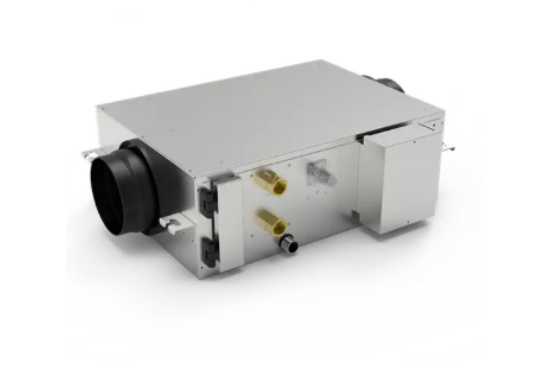
While non-ducted fan coil units offer many benefits, they also come with certain limitations that may make them less suitable for some applications.
One of the main drawbacks of non-ducted systems is that they are best suited for smaller spaces or individual rooms. Unlike ducted systems, which can condition multiple rooms through a central duct network, non-ducted units are limited in their ability to distribute air across larger areas. If you need to condition multiple rooms or a large space, you will likely need to install several non-ducted units, which can lead to higher costs and more visible equipment in the building.
Although some non-ducted fan coil units are designed to be discreet and blend into the room’s decor, they are still visible to a certain extent. Depending on where the unit is installed (e.g., on the wall or ceiling), it may detract from the room's aesthetics. This might be a concern for property owners or businesses that prioritize clean, seamless designs and prefer not to have visible air conditioning units. However, many modern units are designed to be more aesthetically pleasing and can complement the overall interior design.
Non-ducted fan coil units generally produce more noise than ducted systems, as the fan and motor are located within the room. The noise can be particularly noticeable in quiet environments or in spaces where people are trying to focus, such as bedrooms or offices. However, modern non-ducted fan coil units are much quieter than older models, and soundproofing measures can be implemented to reduce noise levels. Choosing a unit with advanced noise-reducing features, such as a variable-speed fan, can also help minimize sound disruptions.
While non-ducted systems are generally energy-efficient, their efficiency depends on the size of the space being conditioned and the number of units required. For larger properties, the energy consumption of several non-ducted units may be higher compared to a centralized ducted system, which can distribute air more efficiently to multiple rooms. However, for smaller spaces, non-ducted fan coil units can offer excellent energy efficiency due to their ability to condition smaller areas with less energy.
Choosing between ducted and non-ducted fan coil units depends on your property’s specific needs, size, and layout. Below is a comparison table to help you decide which option is best for your space:
Feature | Ducted Fan Coil Units | Non-Ducted Fan Coil Units |
Initial Cost | Higher due to ductwork installation | Lower, no ducts required |
Installation Complexity | More complex, requires ducts and professional help | Simpler installation, minimal disruption |
Air Distribution | Ideal for large spaces with multiple rooms | Best for single rooms or small spaces |
Maintenance | Requires periodic duct cleaning and inspections | Easier maintenance, fewer components to clean |
Noise Levels | Quieter, as the unit is often hidden | May produce more noise, as the unit is in-room |
Flexibility | Less flexible, fixed ductwork system | Highly flexible, can be placed in various locations |
Energy Efficiency | Can be energy-efficient with proper insulation | Generally less efficient for large spaces |
Ducted systems are ideal for larger properties or commercial spaces where multiple rooms need to be conditioned. They offer consistent air distribution, quieter operation, and a more seamless aesthetic.
Non-ducted systems are perfect for smaller properties, individual rooms, or places where space and budget are limited. They provide flexibility, easy installation, and are a more cost-effective solution.
Both ducted and non-ducted fan coil units have their advantages, and the best choice for your property depends on the space, budget, and specific needs. For larger properties or commercial spaces, ducted fan coil units offer efficient air distribution and discreet installation. For smaller spaces or individual rooms, non-ducted units provide flexibility and easy installation at a lower cost.
If you’re considering installing fan coil units in your property, we at Taizhou MECO Refrigeration Equipment Co., Ltd. are here to assist you. Our team of experts can guide you through the process of selecting the right system for your needs and provide you with high-quality, energy-efficient units. Contact us today to learn more about our range of fan coil units and how we can help you optimize your HVAC system for maximum comfort and efficiency.