
+86-15712686880 / +86-576-82424800


Views: 0 Author: Site Editor Publish Time: 2026-06-09 Origin: Site


Designing an HVAC system requires precise alignment between mechanical equipment and building architecture. Engineers constantly face complex trade-offs when selecting core components. You must balance spatial constraints, energy efficiency, and indoor air quality (IAQ) to ensure occupant comfort. Deciding between a localized or centralized approach often dictates the structural design and long-term maintenance strategy of a facility. While both systems condition air using hydronic coils and fans, their architectural footprint and application scales differ fundamentally.
This guide provides a direct, vendor-neutral evaluation framework for choosing the right equipment based on project realities. We will explore the fan coil unit vs air handling unit debate by comparing zoning capabilities, infrastructure demands, and maintenance requirements. You will learn exactly how to match the right system to your specific facility type, avoiding costly over-engineering or inadequate ventilation.
Scale and Location: FCUs operate locally within individual rooms or zones, whereas AHUs are centralized systems serving large volumes of space.
Airflow and Ventilation: AHUs manage outside fresh air and complex filtration; FCUs primarily recirculate existing indoor air (though specialized models exist).
Infrastructure Requirements: AHUs require extensive ductwork and dedicated mechanical rooms; FCUs require piping for chilled/hot water and electrical connections.
Cost Dynamics: FCUs generally offer lower initial installation costs in compartmentalized buildings, while AHUs provide streamlined, centralized maintenance.
Understanding mechanical architectures prevents critical design errors during early project phases. Facilities depend on these components to maintain comfortable, safe environments. We must examine how each system fundamentally operates.
Industry professionals define an FCU as a standalone terminal unit. It consists primarily of a heating or cooling coil alongside a motorized fan. They operate locally. You place them directly within the specific room they serve. They do not generate cold or heat internally. Instead, they rely heavily on a central chiller or boiler plant. These central plants pump treated water through piping networks directly to the terminal.
You can choose between several installation variants. Exposed units sit visibly on walls or floors as decorative consoles. They provide easy access but consume floor space. Conversely, concealed units hide completely within structural cavities. For example, a ducted fan coil unit sits invisibly inside a drop ceiling. It uses short duct runs to deliver air through discreet ceiling diffusers. This approach maintains aesthetic integrity while delivering localized climate control.
An AHU takes a completely centralized distribution approach. Engineers describe it as a large-scale mechanical enclosure. It connects directly to an extensive network of ventilation ducts branching throughout the building. Inside the heavy-duty casing, it houses highly specialized components. You will find massive blowers, robust heating and cooling elements, and advanced filter racks. Many advanced units also incorporate motorized dampers and heat recovery wheels. These additions capture exhaust energy and pre-condition incoming air.
They scale dramatically based on application demands. Massive commercial rooftop units serve sprawling stadiums, handling tens of thousands of cubic feet per minute (CFM). Conversely, you might install a compact household air handling unit for large residential applications. Despite the size difference, the underlying engineering principles remain identical. Both consolidate air movement into one centralized location.
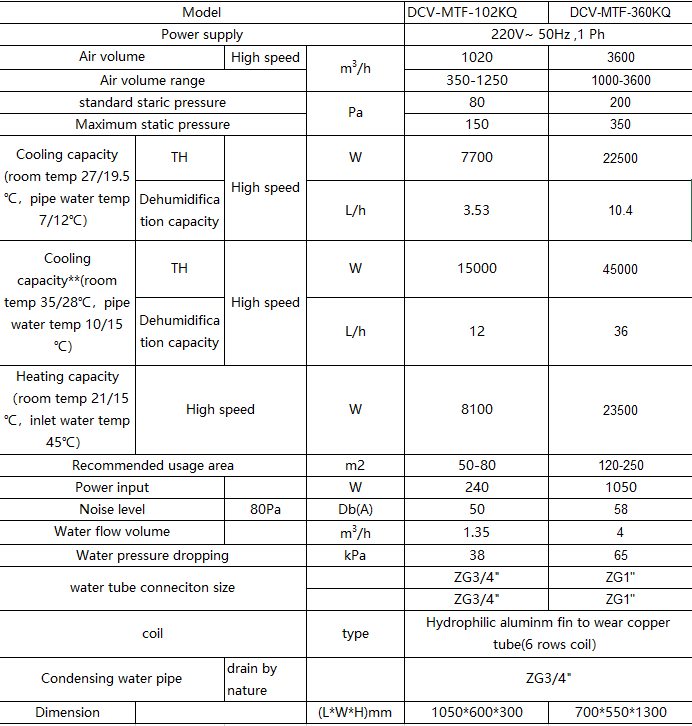
Selecting equipment requires evaluating specific performance dimensions. Different building codes demand different ventilation strategies. We must compare how each system achieves its primary objectives.
Indoor air quality dictates occupant health and cognitive performance. Manufacturers build AHUs specifically to mix, filter, and condition outside air. They draw fresh air from the exterior, pull it through dense MERV-rated filters, and distribute it. This capability makes them essential for compliance regarding strict ventilation codes. Healthcare facilities, cleanrooms, and laboratories rely on them heavily to purge airborne pathogens.
FCUs primarily recirculate existing zone air. They pull room air across their internal coils and blow it right back out. Their standard filters usually only catch basic particulates like large dust and hair. They rarely accommodate thick, high-efficiency filters due to fan motor limitations. Some specialized units accept ducted outside air, but their primary function remains recirculation.
Zoning capabilities determine occupant comfort across varying building exposures. An AHU works best for uniform temperature control across a large, open floor plan. However, achieving distinct multi-zone control requires complex secondary equipment. You must install Variable Air Volume (VAV) boxes in the ductwork. These boxes modulate airflow to specific areas, adding mechanical complexity.
FCUs inherently excel at micro-zoning. Each unit operates completely independently. You can maintain varying temperatures across adjacent rooms effortlessly. A guest in one hotel room can select heavy heating, while the neighboring guest selects maximum cooling. The central plant simply supplies water; the local unit dictates the final outcome.
Spatial footprint impacts structural steel requirements and usable square footage. AHUs demand dedicated mechanical rooms or reinforced roof space. They also require significant ceiling plenum space. Large supply and return ducts consume structural volume. Architects must raise ceiling heights to hide this bulky sheet metal.
FCUs require minimal space. They fit snugly into small closets, under windows, or within shallow drop ceilings. Their piping networks take up a tiny fraction of the cavity compared to sheet metal ductwork. This architectural freedom often allows developers to add extra usable floors within strict building height limits.
Evaluation Dimension | Air Handling Unit (AHU) | Fan Coil Unit (FCU) |
|---|---|---|
Primary Function | Centralized ventilation and conditioning | Localized room-level conditioning |
Air Source | High volume of outside fresh air | Primarily recirculates indoor air |
Filtration Level | Advanced (MERV 13+, HEPA capable) | Basic particulate capture (MERV 4-8) |
Space Requirement | Large mechanical rooms, deep ceiling plenums | Minimal; fits within room cavities |
Zoning Method | Requires VAV boxes for multiple zones | Inherent micro-zoning per unit |
Theoretical design meets harsh reality during project execution. Installation labor, accessibility, and long-term scaling define system success. Evaluating these factors prevents major disruptions down the line.
Equipment procurement and installation labor present diverging resource paths. An AHU carries a very high upfront equipment cost. You purchase a massive, highly engineered piece of machinery. Conversely, purchasing dozens of individual FCUs shifts the financial dynamic. The unit cost stays low, but the cumulative total grows rapidly.
Labor differences aggressively shape the project timeline. AHU installation involves running extensive, bulky sheet metal ductwork throughout the entire building. Duct fitters spend weeks sealing joints and insulating runs. FCU installation completely bypasses massive duct networks. Instead, pipefitters install widespread water piping circuits. Electricians must drop individual power connections into every single room containing a terminal. You must weigh the speed of piping against the complexity of ducting.
Maintenance accessibility dictates long-term facility operational success. AHUs offer a distinct centralized advantage. Maintenance crews service one primary unit inside a dedicated mechanical room. They change filters, grease bearings, and inspect belts without ever entering tenant spaces. This centralization minimizes occupant disruption drastically.
FCUs present unique maintenance challenges. Servicing them requires technicians to enter occupied spaces continuously. Hotel rooms, private offices, and apartments face direct disruption during routine maintenance. Crews must inspect individual condensate drain pans frequently. They must change multiple localized filters scattered across hundreds of rooms. Watch out for blocked drain pans. A clogged line in a concealed ceiling unit can quickly cause severe localized water damage to drywall and furnishings.
System scaling requires careful energy evaluation. You must compare fan energy consumption across different system architectures. A single, highly efficient large AHU blower operates differently than fifty smaller FCU motors running simultaneously. Centralized blowers often utilize premium efficiency motors and variable frequency drives (VFDs). They scale back energy consumption intelligently based on total building demand.
Local terminals run smaller motors. While modern brushless DC motors improve efficiency, managing dozens of individual machines introduces distinct scaling dynamics. Engineers must calculate expected simultaneous usage. If a building remains heavily occupied, a centralized system often scales air delivery more efficiently. If occupancy fluctuates wildly room-by-room, shutting off individual local units conserves significant energy.
Navigating the fan coil unit vs air handling unit decision requires practical application matching. Neither system reigns supreme in all scenarios. You must align the mechanical architecture directly to the building's purpose.
Certain facility types heavily favor localized equipment. If a building demands granular, individual occupant control, decentralized systems win. You should deploy them under the following conditions:
Highly Compartmentalized Buildings: Multi-family residential complexes, hotel towers, and dormitories require isolated climate control. Occupants expect personal thermostats. Decentralized units deliver this perfectly.
Historical Office Retrofits: Older buildings often feature low ceiling clearances. Massive centralized ductwork proves physically impossible to install. Piping networks fit easily into existing narrow structural cavities.
Staggered Occupancy Schedules: Facilities experiencing unpredictable room usage benefit from turning off individual units. You avoid treating empty spaces.
Other facilities demand raw volume and intensive air treatment. Centralized systems dominate when you must manage massive, undivided spaces. You should deploy them under the following conditions:
Large Open-Volume Structures: Theaters, shopping malls, stadiums, and expansive open-plan offices require massive air throws. Local terminals cannot push air far enough to cover these distances.
Strict Indoor Air Quality Mandates: Hospitals and laboratories enforce mandatory air change rates. You must bring in massive volumes of outside air, filter it heavily, and exhaust it. Centralized equipment handles this effortlessly.
High Latent Loads: Facilities requiring strict humidity control benefit from large, deep cooling coils found only in centralized enclosures. They wring moisture out of the air highly effectively.
Securing the right equipment involves stringent procurement strategies. Supply chain variables can delay projects by months. Understanding sourcing mechanics protects your timeline.
Procurement success relies heavily on specification accuracy. You must match unit specifications directly to the exact load calculations provided by mechanical engineers. Centralized systems often require heavy customization. Engineers specify exact coil depths, blower curves, and filter dimensions. This customization extends manufacturing lead times significantly.
Local terminal units often allow for broader standardization. Manufacturers produce them in standard capacity blocks. However, you must still match the water temperatures and flow rates perfectly. Guessing capacities leads to poor humidity control or excessive noise.
Selecting the right vendor reduces critical project risks. Commercial projects gain a massive strategic advantage by partnering directly with an OEM fan coil manufacturer. Direct factory partnerships ensure precise coil capacities matching your specific water loops. They offer customized acoustic insulation packages to keep room noise minimal. Furthermore, direct partnerships guarantee reliable lead times for bulk orders.
When evaluating either system type, always demand recognized certifications. Look specifically for AHRI certification or equivalent regional standards. These independent bodies test equipment rigorously. Certifications guarantee the machine actually delivers the advertised cooling capacity and airflow. Skipping certified equipment invites severe performance deficits post-installation.
The fan coil unit vs air handling unit debate avoids objective superiority. Instead, it asks which architecture aligns best with your specific facility. You must evaluate the building’s spatial realities, stringent IAQ requirements, and long-term maintenance capabilities. Centralized systems conquer large volumes and strict ventilation codes. Localized systems master micro-zoning and tight architectural constraints.
We strongly recommend scheduling a final consultation before issuing procurement orders. Engage a licensed HVAC engineer or an experienced MEP design firm. They will run localized load calculations, verify structural clearances, and finalize the mechanical layout. Making a data-driven choice ensures optimal occupant comfort and streamlined facility operations for decades.
A: Typically no, as they are primarily designed to recirculate existing indoor air over their coils. However, specialized models do exist. You can connect certain units via short ducts to a dedicated outside air system (DOAS) to introduce pre-conditioned fresh air directly into the space.
A: Most commercial AHUs rely heavily on external chiller plants and boilers. These central plants supply hot or cold water directly to the internal coils. However, some specialized units feature direct expansion (DX) refrigerant coils or integrated electric heating elements to generate temperature changes independently.
A: The underlying physical principle is identical. However, household units are significantly smaller. They manage much lower airflow volumes (CFM). They generally feature simpler blower motors and lack the complex motorized damper networks or heavy-duty heat recovery wheels found inside massive commercial-grade units.
A: FCUs sit within or directly adjacent to the occupied space. Consequently, fan whir and water flow noise can become noticeable if not properly specified. AHUs operate remotely inside mechanical rooms, keeping heavy machinery noise far away from occupants. However, air-rush noise traveling through ducts must be managed.