
+86-15712686880 / +86-576-82424800


Views: 0 Author: Site Editor Publish Time: 2026-02-04 Origin: Site


Selecting the correct static pressure is one of the most critical—but often misunderstood—steps when designing an HVAC system using a ceiling conceal duct type fan coil unit. In commercial buildings, hotels, hospitals, offices, and residential developments, these units are widely used for their quiet operation, space-saving installation, and flexible air distribution. However, even the most advanced fan coil unit cannot perform as intended if static pressure is improperly selected.
From our experience working closely with system designers, contractors, and facility managers, we have seen that incorrect static pressure selection leads to insufficient airflow, excessive noise, energy waste, or premature equipment wear. These issues not only affect comfort but also increase long-term operating costs.
In this article, we explain what static pressure really means, why it matters for ceiling conceal duct type fan coil units, and how to select the correct static pressure based on duct layout, application, and performance requirements. Our goal is to help you make informed, practical decisions that result in stable airflow, quiet operation, and reliable system performance.
Static pressure refers to the resistance that the fan must overcome to move air through the duct system. In ceiling conceal duct type fan coil units, static pressure is usually expressed in Pascals (Pa) and represents the fan’s ability to push conditioned air through ducts, fittings, filters, and diffusers.
Static pressure loss accumulates as air passes through:
Duct length and size
Bends and elbows
Branches and transitions
Air filters
Supply diffusers and grilles
Each component adds resistance, and the fan inside the fan coil unit must be strong enough to overcome this total resistance while still delivering the required airflow.
Unlike exposed or cassette-style fan coil units, a ceiling conceal duct type fan coil unit relies entirely on ductwork to deliver conditioned air into the occupied space. Once installed above the ceiling, the unit itself is invisible to end users, and all airflow performance depends on how effectively air is pushed through ducts, branches, and diffusers.
Because of this hidden installation, any mismatch in static pressure is often not discovered until after commissioning—or worse, after the space is already occupied. At that point, correcting airflow issues may require duct modifications or even equipment replacement, significantly increasing project cost and disruption.
Problem | Cause |
Insufficient airflow | Static pressure too low |
High noise levels | Static pressure too high |
Uneven room temperature | Improper airflow distribution |
Increased energy consumption | Fan operating outside optimal range |
Shortened equipment lifespan | Continuous overload or imbalance |
When static pressure is too low, the fan cannot overcome system resistance, resulting in weak airflow at diffusers and poor thermal comfort. Conversely, excessive static pressure forces the fan to operate at higher speeds, generating unnecessary noise and consuming more energy than required.
Proper static pressure selection ensures that the ceiling conceal duct type fan coil unit operates within its design performance curve, maintaining stable airflow, quiet operation, and long-term efficiency.
To accommodate different duct configurations, ceiling conceal duct type fan coil units are commonly designed with multiple static pressure options. These options allow designers to match equipment capability to actual system resistance rather than overcompensating.
Static Pressure Level | Typical Range (Pa) | Application |
Low static pressure | 12–30 Pa | Short ducts, minimal branches |
Medium static pressure | 30–50 Pa | Standard commercial layouts |
High static pressure | 50–80 Pa | Long ducts, multiple diffusers |
Low static pressure units are suitable for compact layouts where ducts are short and airflow paths are simple. Medium static pressure units are the most widely used, balancing performance and efficiency in offices, hotels, and retail spaces. High static pressure units are designed for complex duct networks where air must travel long distances or supply multiple zones.
Identifying which category your project falls into is the first and most important step toward correct equipment selection.
Static pressure requirements are not arbitrary. They are determined by a combination of physical duct characteristics and airflow demand.
Every meter of duct and every change in direction adds resistance. As duct length increases, friction losses accumulate, requiring higher static pressure to maintain airflow.
Straight, short ducts → lower static pressure
Long ducts with multiple turns → higher static pressure
Complex layouts with multiple elbows, transitions, or vertical risers significantly increase pressure loss and must be carefully evaluated during design.
Each diffuser introduces resistance into the system. A fan coil supplying a single room through one diffuser requires far less pressure than a unit feeding several rooms or zones.
As the number of outlets increases:
Total airflow demand rises
Balancing requirements become stricter
Static pressure must be sufficient to reach the furthest outlet
Duct size has a direct impact on airflow resistance.
Smaller ducts increase air velocity and friction loss
Poorly sealed ducts cause air leakage and pressure imbalance
Proper duct sizing often allows designers to use a lower static pressure unit, improving energy efficiency while maintaining comfort.
Static pressure cannot be selected independently of airflow volume. Higher airflow (m³/h) requires greater fan power to overcome resistance.
A correct selection always considers:
Required airflow
Total system pressure loss
Fan performance curve
Ignoring this relationship leads to underperforming or inefficient systems.
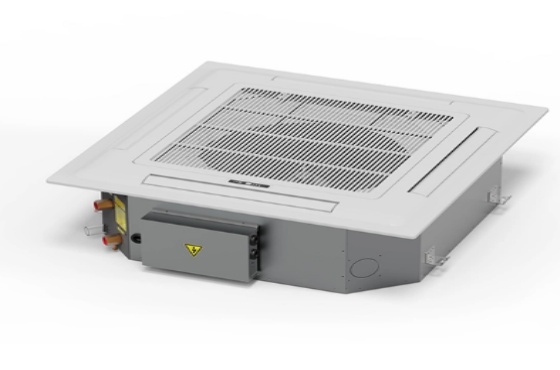
Practical application experience provides valuable guidance when selecting static pressure.
Application | Duct Characteristics | Recommended Static Pressure |
Hotel guest rooms | Short ducts, few outlets | 12–30 Pa |
Office floors | Medium ducts, multiple diffusers | 30–50 Pa |
Hospitals | Long ducts, strict airflow control | 50–80 Pa |
Villas / apartments | Compact layouts | 12–30 Pa |
Selecting a ceiling conceal duct type fan coil unit based on actual airflow resistance rather than assumptions prevents common problems such as uneven cooling, occupant complaints, and costly retrofits.
Static pressure selection has a direct influence on acoustic performance. Higher pressure generally results in:
Higher fan speed
Increased air velocity
Greater potential for noise
However, insufficient static pressure can also cause noise. When air struggles to reach diffusers, turbulence occurs at duct fittings and outlets, creating unwanted sound.
The key is balanced selection, ensuring:
Adequate airflow to all outlets
Stable fan operation within optimal range
Low sound levels in occupied spaces
High-quality ceiling conceal duct type fan coil units are engineered with optimized fan curves, allowing them to deliver the required static pressure while maintaining quiet, comfortable operation. When static pressure is properly matched to the system, users benefit from consistent temperatures, low noise, and long-term reliability.
Choosing excessive static pressure increases energy consumption unnecessarily. Fans operating above required pressure consume more power and generate more heat.
Static Pressure | Relative Fan Energy Use |
Correctly matched | Baseline |
Overestimated | +10–25% |
Underestimated | Inefficient airflow, longer run times |
Correct static pressure selection directly contributes to:
Lower electricity bills
Reduced maintenance
Longer equipment lifespan
Modern ceiling conceal duct type fan coil units often feature:
Multi-speed motors
EC fan options
Adjustable static pressure settings
These features allow fine-tuning during commissioning, compensating for minor design deviations without replacing equipment.
This flexibility is especially valuable in projects where duct layouts evolve during construction.
Selecting the correct static pressure is essential to the successful performance of a ceiling conceal duct type fan coil unit. It directly affects airflow delivery, noise levels, energy efficiency, and overall equipment lifespan. An incorrect choice—whether too low or too high—often leads to comfort issues, excessive noise, increased operating costs, and premature wear, all of which are difficult and costly to resolve after installation.
Instead of relying on assumptions or oversized safety margins, static pressure should be determined based on real system conditions. Factors such as duct length, layout complexity, number of air outlets, duct sizing, and required airflow must be evaluated together. When static pressure is properly matched to these parameters, the fan coil unit operates within its optimal range, delivering stable airflow, quiet performance, and long-term efficiency.
If you are planning or optimizing a project involving ceiling conceal duct type fan coil units, working with an experienced manufacturer can make the selection process more reliable. You can contact Taizhou MECO Refrigeration Equipment Co., Ltd. to learn more about suitable solutions, technical support, and product options tailored to your specific application needs.
Insufficient static pressure results in poor airflow, uneven cooling or heating, and reduced comfort in occupied spaces.
No. Excessive static pressure increases noise and energy consumption without improving comfort.
It is calculated by summing pressure losses from ducts, fittings, filters, and diffusers in the system.
Units with adjustable speeds or EC fans offer flexibility, but selection should still be based on system design.