
+86-15712686880 / +86-576-82424800


 |


| Quantity: | |
|---|---|
MFP-170TM-BL
MECO
The vertical air blowing decorative fan coil unit is a floor-standing HVAC terminal designed for exposed installation in occupied spaces. The unit stands on support feet and delivers conditioned air upward from the top discharge grille. Its rectangular cabinet design installs directly against interior walls, requiring no ceiling plenum space for placement.
Room air enters the unit through intake openings, passes across the finned tube heat exchanger where it transfers heat with water circulating in the coil, and discharges vertically from the top outlet. The upward air flow pattern creates circulation throughout the room without directing air streams directly at occupants. The unit connects to a central hydronic system supplying chilled water for cooling or hot water for heating.
Parameter | Value |
|---|---|
Model | MFP-170TM-BL |
Air volume | 1700 m³/h |
Cooling capacity | 9000 W |
Heating capacity | 13500 W |
Noise level | 48 dB |
Power input | 152 W |
Water flow volume | 1.54 m³/h |
Pressure drop | 22 kPa |
FCEER | 55 |
FCCOP | 82 |
 |  |
The full decorative fan coil series covers air volume from 340-2380 m³/h, with cooling capacity ranging from 1800-12600 W and heating capacity from 2700-18900 W across available model sizes.
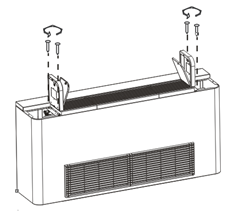
The unit features a rectangular vertical cabinet with a smooth exterior finish, designed for exposed installation where the unit remains visible in the room. The cabinet stands on integrated support feet that elevate the unit above the floor surface. The top panel incorporates the discharge air grille with uniform opening patterns.
The unit uses a PVC drain pan with two water outlet positions. The hollow structure design provides thermal insulation for the pan surface, reducing condensation formation on exterior surfaces and lowering the risk of water leakage from condensate overflow.
Water pipe connections can be configured for either left-side or right-side entry, allowing installation teams to adapt the unit to existing piping layouts on site without reworking the hydronic connections.
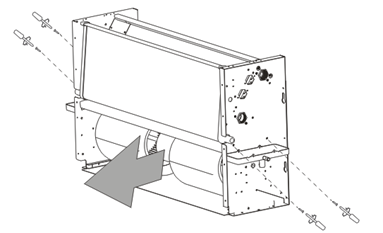
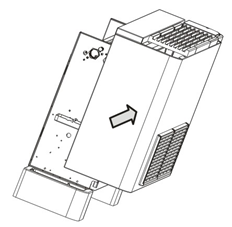
The outer casing removes from the main body without specialized tools, providing direct access to the fan and motor module for service work. This design reduces the time required for inspection, filter replacement, and component servicing during routine maintenance.
The standard configuration uses floor-mounted support feet for vertical placement against walls. This installation method requires no ceiling structure and works in spaces without suspended ceilings or adequate plenum depth.
The universal chassis design supports both vertical and horizontal installation orientations depending on project requirements. This flexibility allows the same unit model to serve different spatial constraints within a single building project.
The decorative fan coil product line includes six different style variants across the series, accommodating ceiling-mounted, floor-standing, and wall-mounted installation scenarios. Project specifiers can select the appropriate variant based on room layout, ceiling height, and interior design requirements.
Vertical decorative fan coil units serve various commercial and institutional settings including hotel lobbies, restaurant dining areas, office spaces, retail showrooms, and residential applications where exposed installation is preferred or required. The units suit renovation projects where ceiling ductwork installation is impractical due to structural constraints or budget limitations. For commercial procurement projects, the exposed design reduces installation labor compared to fully concealed ducted systems, as no ceiling modifications or extensive duct fabrication are required.
Decorative exposed units install directly in the occupied space with visible cabinetry, requiring no ceiling plenum or ductwork. Concealed ducted units install above ceilings and connect to supply air ducts. Exposed units have lower installation cost and simpler maintenance access, while concealed units preserve ceiling aesthetics.
Yes, the unit operates with chilled water for cooling and hot water for heating when connected to a 2-pipe hydronic system that switches seasonally. The actual mode depends on the water temperature supplied by the central HVAC plant serving the building.
The unit dimensions vary by model size. For the MFP-170TM-BL, installers should refer to the dimensional drawing for exact footprint and clearance requirements. A minimum service clearance in front of the unit is recommended for filter access and maintenance work.
Filter service intervals depend on operating hours and indoor air quality conditions. For typical commercial office environments with standard occupancy, visual inspection every three months is standard practice, with replacement performed when visible dust accumulation reaches the filter surface. Higher-dust environments may require shorter intervals.


